The RAM in Your Next Build Is Going to Cost You Twice What It Should
DDR5 32GB kits were selling for $95 in mid-2025. By early 2026 the same kit costs between $400 and $450. Analysts project prices reaching $550 to $600 by Q2 2026. That is a 478% increase in twelve months, and there is no near-term correction coming.
 ReaperX
·
20 April, 2026
·
4 min read
ReaperX
·
20 April, 2026
·
4 min read
Patch Notes – Issue 003
DDR5 Consumer Market – Status: Supply Crisis. No Relief Before Late 2027.
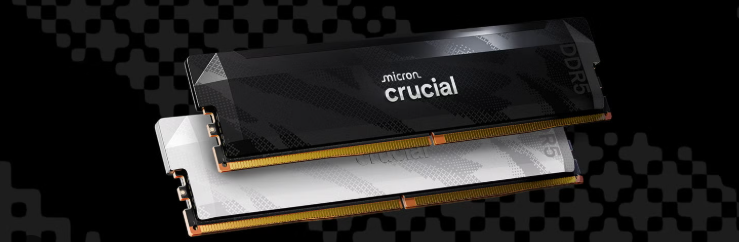
The mechanics are not complicated. AI data centre buildouts consumed the majority of global memory production through 2025. Samsung, SK Hynix, and Micron shifted production lines from standard consumer DRAM toward High Bandwidth Memory, the specialised chip that AI accelerators require. The supply available for desktop and laptop DDR5 contracted sharply while demand held steady. Prices followed.
The scale is worth sitting with. A 16GB DDR5 chip traded at approximately $6.84 in September 2025. By late December it had reached $27.20. That is a 298% increase in three months. TrendForce revised its Q4 2025 DRAM price forecast upward from an earlier estimate of 8-13% quarter-on-quarter growth to 18-23%. The same analysts project DDR5 prices rising 30-50% per quarter through the first half of 2026.
Samsung has explicitly stated it will not aggressively expand commodity DRAM capacity, preferring to protect margins over market share. The company told investors it can currently fulfil only around 70% of DRAM orders. That is not a production failure. It is a strategic decision. SK Hynix’s chairman publicly confirmed customers are “begging for supply.” They are aware. Framework, which builds modular laptops and is unusually transparent about its supply chain, increased DDR5 module pricing by 50% in a single update in early 2026, warning of continued volatility through the rest of the year.
New fabrication capacity is coming. Samsung’s Pyeongtaek P4 facility will ramp through 2026. Micron’s Idaho expansion targets late 2027. Meaningful supply relief is not expected before late 2027, with genuine normalisation more likely in 2028.
DDR4 Legacy Market – Status: Worse Than You Think.
The instinct to stay on DDR4 platforms to avoid DDR5 pricing is understandable and wrong. A 32GB DDR4 kit that cost between $60 and $90 in October 2025 was selling for $150 to $180 by January 2026. DDR4 is not a safe haven. It is an end-of-life product whose supply is tightening because manufacturers are phasing out production to focus on higher-margin lines.
Samsung ended production of 8Gb DDR4 chips on the 1y/1z nm process in early 2025, with final module shipments wrapping by December 2025. Micron discontinued legacy DDR4 server DIMMs on a similar timeline. The coordinated exit from DDR4 production was not a conspiracy. It was rational profit-seeking by three companies that control the majority of global DRAM output. The side effect is that DDR4, once the budget option, now costs nearly as much per kit as DDR5 in some configurations, with worse long-term availability.
Retailers have started bundling DDR5 kits with processors and motherboards to move stock. Scalpers are using automated bots to acquire limited supply at launch prices before relisting at a premium. The market is genuinely chaotic.
The Recovery Timeline – Status: Not What You Want to Hear.
IDC and Gartner both project pricing relief beginning in late 2027. Counterpoint Research has forecast that 64GB DDR5 RDIMM modules could cost twice as much by the end of 2026 as they did at the start of 2025. IDC estimates combined DRAM and NAND supply growth at around 16-17% in 2026, below the pace of demand growth.
Even after prices begin to fall, analysts expect the new floor to sit significantly above pre-2023 levels. RAM is no longer a predictable commodity purchase. It is a volatile component whose price can move double digits in a single month.
If you are building now, buy what you need. The idea that prices will soften before your build is complete is not supported by any current market data. If your build is six months out, budget 20% more than today’s price and expect to still be surprised.
Known Issues
The memory shortage is described as an AI problem. It is more precisely a concentration problem. Three companies, Samsung, SK Hynix, and Micron, control global DRAM production. All three have made the same rational decision to prioritise high-margin enterprise and AI memory over consumer products. There is no fourth option. There is no alternative supplier. When three companies with aligned incentives make the same supply decision simultaneously, the consumer has no leverage and no alternative.
The AI infrastructure build-out that created this situation is not slowing. Cloud providers committed hundreds of billions to data centre expansion through 2025 and 2026. That spending does not stop because consumers want affordable RAM. The consumer market is residual demand in a world where enterprise is the primary customer. Pricing will reflect that relationship until new capacity changes the arithmetic, which is not happening before 2027.