Steam Controller (2026) | £85
The first thing worth saying is that it does not feel like a £85 controller. It feels like a £120 controller.
 ReaperX
·
5 May, 2026
·
3 min read
ReaperX
·
5 May, 2026
·
3 min read
Arrived yesterday. A few hours in. No verdict, just observations.
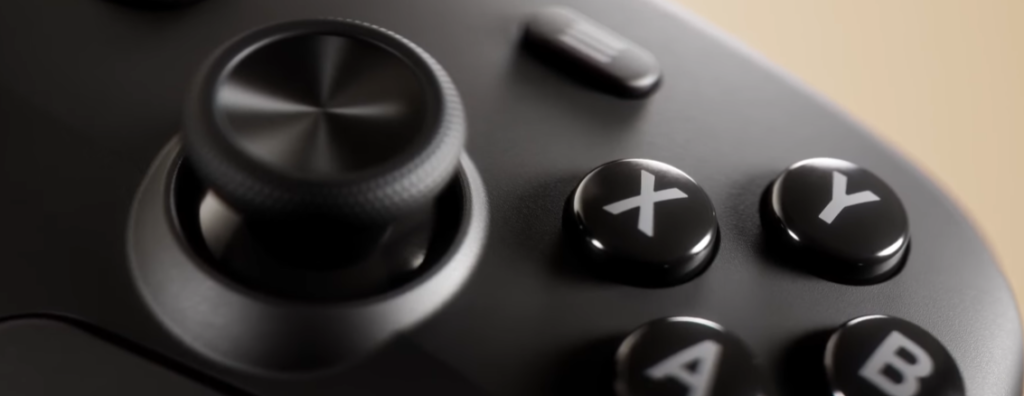
The first thing worth saying is that it does not feel like a £85 controller. It feels like a £120 controller. 292 grams, solid plastic that matches the Steam Deck’s texture and finish, rear paddles positioned low enough on the grips that they are actually usable rather than decorative. First impressions on build quality are good.
The TMR sticks are the headline feature and they earn it. No deadzone weirdness, no sign of drift, and the resistance feels right. Every controller I have owned in the last five years has eventually developed stick drift, including two DualSense pads and a Steam Deck that I replaced the sticks on. If the TMR technology holds up over months rather than hours, it alone justifies looking at this over a standard pad. Too early to know that. Worth flagging.
The trackpads sit below the sticks rather than replacing them, which is the correct lesson from the 2015 original. They are smaller than the original’s satellite-dish approach, square rather than circular, and noticeably snappier. Twenty minutes navigating a desktop and a few games with mouse-heavy inventory systems and the case for them is immediately apparent. Whether you reach for them in a firefight is a different question. I did not. But for strategy games, for menus, for anything that would normally require shifting to a mouse, they work.
The buttons are the one thing early reviews flag unanimously and they are right to. Membrane, not mechanical. They feel correct and nothing more. The DualSense buttons have a tactile quality that these do not. At £85 that might be an acceptable compromise depending on what you are replacing. If you are coming from an Xbox Elite Series 2 at £160, you will notice.
The Puck is a thoughtful inclusion. A 2.4GHz wireless receiver that doubles as a magnetic charging dock, sits on the desk, and the controller snaps onto it when you are done. Eight milliseconds wireless latency, which is low enough that I personally did not notice it. Valve have thought about the physical workflow here in a way they did not with the original.
The question nobody wants to answer directly: does the PC market need another controller?
The honest answer is probably not in the way that question usually gets asked, meaning as a general-purpose gamepad. The DualSense, the Xbox controller, and a dozen third-party options with Hall effect sticks already cover that ground. If you want something to play Elden Ring with, you have options that cost less and require zero setup.
Where the Steam Controller makes a specific case is the niche nobody else is serving: playing games on PC that were not designed for a controller, from a couch, without a mouse on the arm of your chair. Strategy games. Point-and-click. Deep RPG inventory screens. The stuff that keeps people at a desk when everything else in their living room is already hooked up to a TV. The trackpads plus gyro combination is not replicated anywhere in this price range, and possibly anywhere at any price range.
The 35-hour battery claim also puts every console controller to shame. The DualSense manages around 12 hours in practice. I have not had the Steam Controller long enough to test Valve’s figure, but the battery indicator has barely moved.
The £85 price sits above a standard pad and below an Elite-tier one. That positioning makes sense for what this is. It is not competing with the DualSense on feel. It is competing on capability for a specific type of PC gaming that the DualSense cannot touch.
Come back when I have had it for a month.