The Developers Getting Cut First Are the Ones Who Made Games Worth Playing
The people being kept are the people running the money.
 ReaperX
·
5 May, 2026
·
3 min read
ReaperX
·
5 May, 2026
·
3 min read
Of the 9,175 game industry layoffs tracked in 2025, narrative roles took the heaviest proportional hit. The GDC 2025 State of the Game Industry survey found that 19% of narrative designers and writers reported being laid off, the highest figure of any discipline surveyed. Business and Finance saw 6%. The people being kept are the people running the money. The people being cut are the people making the thing.
This is not coincidence and it is not a market correction. It is a series of decisions made by executives who have concluded that story is a cost centre rather than a product differentiator, and that AI can eventually replace the writers they are currently paying. Both conclusions are wrong, and the games shipping in three to four years will demonstrate that in ways that are expensive to reverse.
The case against narrative investment has a surface logic. Writing is hard to quantify. A gameplay system can be A/B tested. A story beat cannot. Engagement metrics track session length and return rate, not whether a player was moved by a character death. Cuts to narrative teams do not show up immediately in the product because games have multi-year development cycles. The damage is invisible until the game ships.
Generative AI
The GDC 2026 survey found that 52% of game professionals now believe generative AI is harmful to the industry, up from 30% in 2025. The sharpest negative sentiment is concentrated among creative disciplines. Ubisoft has publicly deployed AI tools for generating NPC dialogue, which the company describes as augmenting writers and which critics more accurately describe as a rationalisation for reducing headcount. The two things are not mutually exclusive. AI can generate NPC barks and also be used as justification to employ fewer people to write them.
What AI cannot currently do, and what its advocates in executive positions consistently underestimate, is generate the structural decisions that make a narrative work. The GDC 2025 data notes that AI “still requires significant human guidance, curation, and refinement to reach professional quality” in creative output. That refinement is the job. Generating a thousand lines of NPC dialogue is not writing. Knowing which hundred of them serve the game’s tone and which nine hundred dilute it is writing. That distinction requires a writer.
What gamers remember
The games people remember are not remembered for their mechanics alone. Disco Elysium, which sold over three million copies, built its entire value proposition on writing. Baldur’s Gate 3, the most commercially successful RPG in years, was praised specifically for the quality of its authored content in a genre where procedural generation already exists as an option. Players chose the written thing. They will keep choosing it.
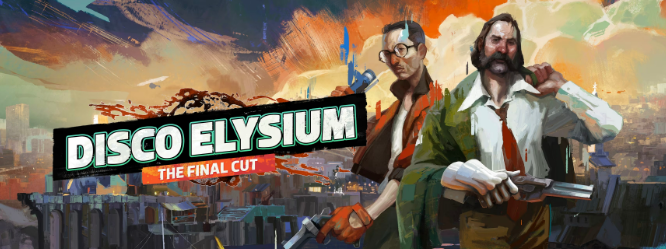
The counterargument is that most games do not need to be Disco Elysium. Fair. But that argument does not follow through to “therefore we do not need writers.” It follows through to “we need writers deployed efficiently.” Cutting narrative teams and replacing them with AI prompts is not efficiency. It is a product decision that will show up in reviews in 2027 and in sales numbers in 2028. The executives making it will have moved on by then.
The 19% layoff rate among narrative professionals is not an industry recalibrating. It is the industry making the same mistake it makes with every new cost-reduction tool: assuming that the output of a discipline is separable from the judgment that produces it.